The proposed option to charge a specially increased surcharge rate for second homes in exposed areas has been removed from the bill. A French Senate committee amended the natural-disaster insurance proposal on 14 October. This does not abolish the current surcharge or reduce an existing policy’s cost. A French Riviera villa buyer still needs to check cover for the actual property.
What has changed in the proposed pricing for second homes?
The proposed option to increase the surcharge rate specifically for second homes has been removed. The text sent to the Senate, adopted by the National Assembly on 8 April, concerned homes in areas defined by natural-risk prevention plans. Its separate €20 million insured-value threshold applied to business property, not second homes.
The amendment adopted by the committee replaces that article and removes the option. The natural-disaster surcharge, often called CatNat, is part of the insurance premium funding France’s compensation scheme. Removing the proposed special pricing does not abolish that existing surcharge.
The amendment’s page is dated 12 October; that is not its adoption date. The official legislative record records the committee stage on 14 October and a plenary debate scheduled for 19 October. This article describes an adopted committee amendment, not a final law.
Could the overall insurance premium still increase?
Yes. An unchanged premium is not promised. The wording adopted by the committee proposes an adjustment to the general surcharge rate at least every five years, following an opinion from the state reinsurer. This is a proposed regular revision mechanism, not a five-year freeze or an announced increase of a specified amount.
The bill also allows a different rate for legal entities and the individual business owners it covers, compared with other individuals. Ownership through a company therefore requires a separate check; the villa’s price does not determine that status.
Even without this reform, the overall premium depends on the property, cover and policy terms. France’s Ministry of Economy explains that it can change, including through indexation and changes to the insured risk. The amendment cannot be used to calculate an individual owner’s future insurance bill.
Which insurance checks matter before buying a villa in France?
Obtain a proposal for your property and intended use. Before committing to the purchase, compare the damage history, specialist reports, claims payments and completed repairs. Tell the insurer that it is a second home, how long it will be unoccupied and whether it will be rented out; request cover, exclusions, excesses and limits.
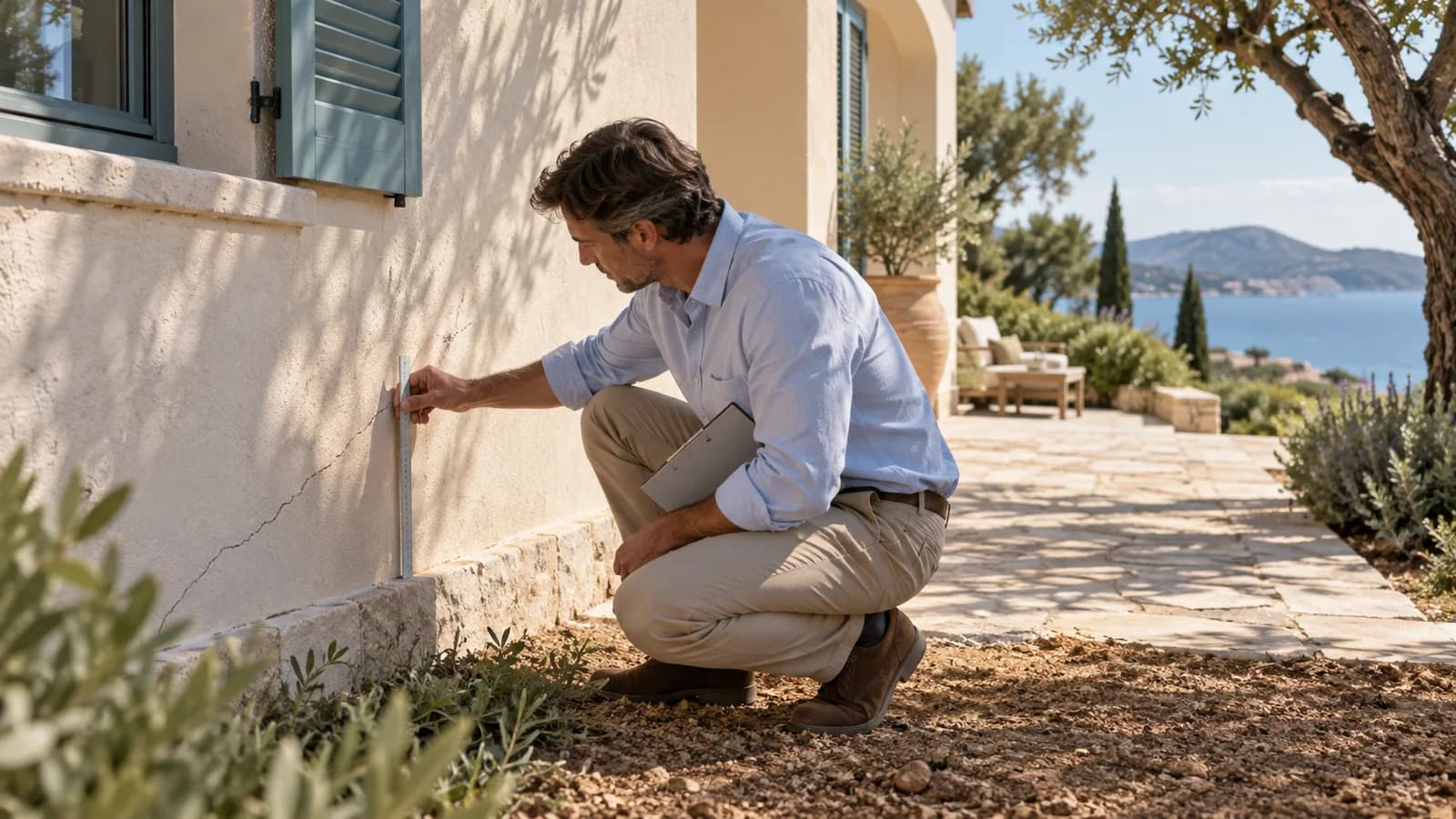
Official recognition of a natural disaster does not establish that the house is safe or adequately insured. According to France’s public information service, the damaged property must be insured and the event officially recognised; payment depends on the damage and cover. Where clay soils are concerned, assess the map, the building’s condition and repair history separately.
What should you check next?
The next task is to identify which past damage and future policy terms could change your decision on this house. Continue with checks on a villa’s history and insurance. The listing, intended use and available-document list provide a starting point for discussing with IMMO BTC which questions belong with the notary, technical specialist and insurer.
Sources and review date: Senate legislative record, text transmitted on 9 April, adopted committee amendment, home insurance — Ministry of Economy, natural-disaster compensation — France’s public information service. Checked on 14 October 2026. The 19 October debate remains scheduled; the final rules and individual policy terms are not guaranteed.